

If you’ve ever stood in a queue watching Cast Members walk every row of a ride vehicle checking seat belts and lap bars, you know exactly how much time that process takes. Disney has now filed a patent for a system that could change all of that — and if it gets deployed at Walt Disney World, it could meaningfully speed up how fast rides can load and dispatch.
Disney’s new AI restraint verification system uses cameras and machine learning to automatically confirm that every guest’s restraint is properly secured — without a Cast Member walking the vehicle. Here’s how it works and what it could mean for park guests.
Disney’s New AI Ride Restraint Verification System: What the Patent Says
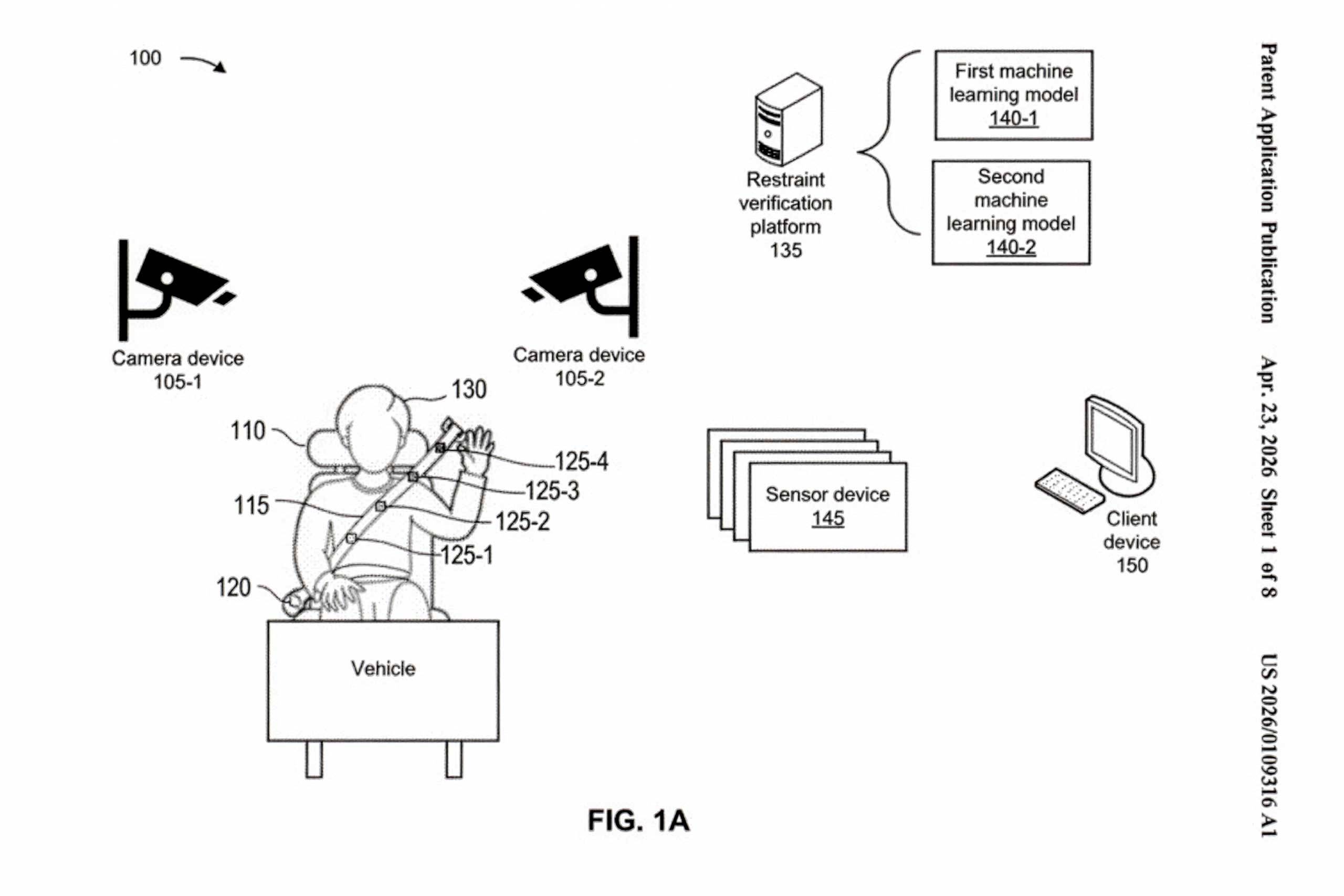
Disney filed US Patent Application US 2026/0109316 A1, titled “System and Method for Verifying Proper Usage of Passenger Restraints,” published April 23, 2026. The system uses video cameras combined with machine learning models to analyze whether each guest’s restraint is properly engaged before a vehicle dispatches.
But it doesn’t rely on cameras alone. The system combines video analytics with data from multiple additional sensors:
- Seat sensors — detect whether a guest is physically seated
- Clasping sensors — confirm whether a restraint is in a locked position
- Rotary encoder devices — measure the physical length of seat belt extended
By cross-referencing all of these data sources simultaneously, the system can catch things a single sensor or a single camera angle might miss. For example: if the sensor data says a guest is seated but the video analysis disagrees, the system can flag that a sensor may be experiencing a fault and alert the operator. That kind of redundancy is what makes this more than just a camera mounted on a ride.
What the System Can Do When It Detects a Problem
The system isn’t just observational — it’s designed to take action. According to the patent, it can:
- Alert the operator when a restraint issue is detected
- Stop or pause the ride if a problem is identified after dispatch
- Prevent dispatch entirely if a restraint isn’t properly secured before the vehicle moves
The patent also includes provisions for guest placement — for example, placing children in interior seats with adults on the outside, and identifying when a guest’s size may not be compatible with a restraint’s minimum closure requirements. That last part has obvious implications for accessibility and size accommodation situations that currently require manual Cast Member judgment calls.
Why This Matters: The Ride Loading Problem at Walt Disney World
Anyone who has spent a day at Walt Disney World understands that ride loading efficiency is everything. The longer it takes to check restraints, fill seats, and dispatch a vehicle, the fewer guests can experience an attraction per hour. On busy days, that math directly affects how long you’re standing in a queue.
The current manual process — Cast Members physically walking each vehicle, checking belts and bars, sometimes asking guests to pull on the yellow tag — is reliable, but it’s slow. The AI system wouldn’t eliminate Cast Member involvement entirely, but it would give operators real-time confirmation on the entire vehicle at once rather than requiring a physical walk-through of every row.
Disney Has Done This Before — At Dinosaur
This isn’t Disney’s first move toward video-assisted restraint verification. Several years ago, Disney installed overhead cameras directly on the ride vehicles at Dinosaur at Animal Kingdom. Those cameras gave Cast Members at the dispatch panel a live video feed of the entire vehicle, allowing them to see all guests in their seats without walking the full length of the vehicle.
That system worked alongside the existing physical inspection process — it didn’t replace it. The new AI patent goes further, using machine learning to actually analyze and verify restraint status automatically rather than just providing a video view for human interpretation.
Is This Coming to Walt Disney World?
A filed patent doesn’t guarantee deployment. Disney files patents regularly, and many never make it into the parks. But this patent is unusually specific in its operational detail, and the underlying problem it solves — slow manual restraint checking being a throughput bottleneck — is very real across multiple Walt Disney World attractions.
High-capacity rides like Seven Dwarfs Mine Train, Big Thunder Mountain, Slinky Dog Dash, and others all rely on fast, accurate restraint verification to maintain their hourly ridership numbers. Any system that speeds up that step — without compromising safety — would be a significant operational win for the parks.
The Bottom Line
Disney’s new AI restraint verification system could be one of the most impactful behind-the-scenes improvements to arrive at Walt Disney World in years. By using cameras, sensors, and machine learning to automatically confirm every restraint before a vehicle dispatches, the system addresses one of the most consistent throughput bottlenecks in theme park operations.
Nothing has been confirmed for Walt Disney World deployment yet. But the technology is clearly designed with real parks in mind — and if it works as described, guests might one day notice rides dispatching faster without knowing exactly why. That’s Disney Imagineering doing its job well.
20% Off site-wide, plus Free Shipping on all orders of $65+
Over 75+ Designs! Your next park shirt is just a click away
Looking To Book Your Dream Disney Vacation?
Your Disney vacation should create unforgettable memories that last a lifetime.
Whether you’re a first-time Disney vacationer or looking to plan your next magical adventure, it isn’t enough just to go on a Disney vacation. We want you to talk about your vacation for years to come and create memories you’ll cherish forever. Vacation is calling! Are you ready to answer?


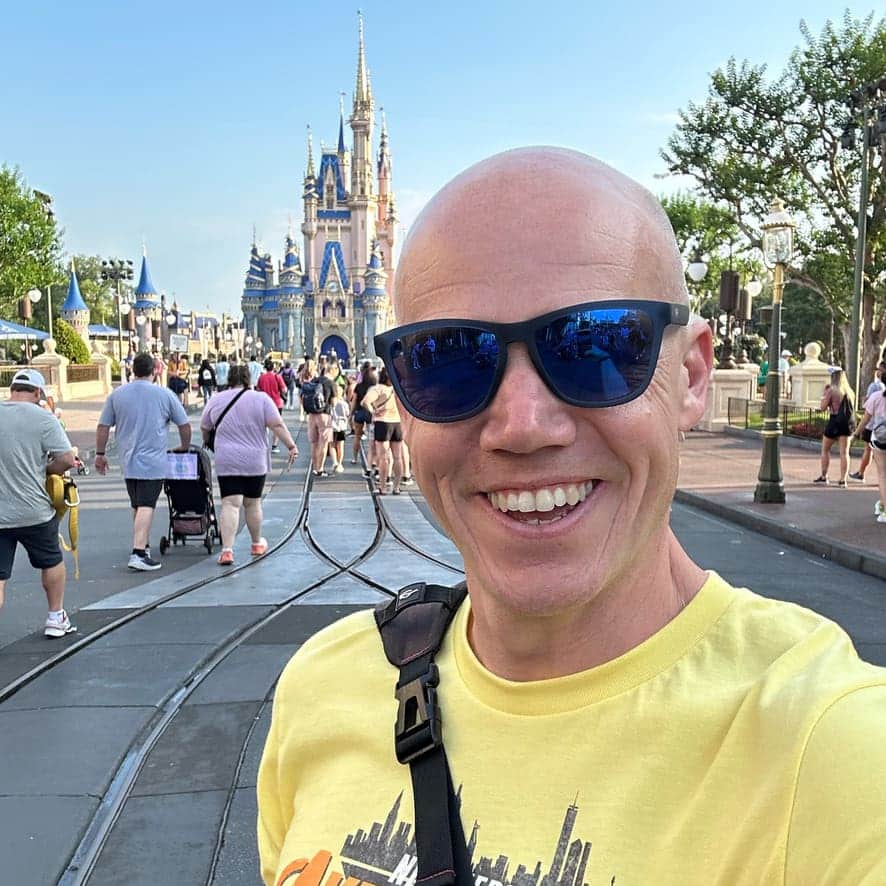
Meet the Author: Nate Bishop
I’m a die-hard Disney fan with 38 years of visits under my belt, having stepped into Disney World 120+ times. Proud to be a Disney Annual Passholder, a Vacation Club member since ’92, a Castaway Club Member, and a runDisney enthusiast. Oh, and I’ve graduated from the Disney College of Knowledge. Need Disney insights or planning tips? I’m your guy!
LAST UPDATED: